 Fraunhofer Institute for Ceramic Technologies and Systems IKTS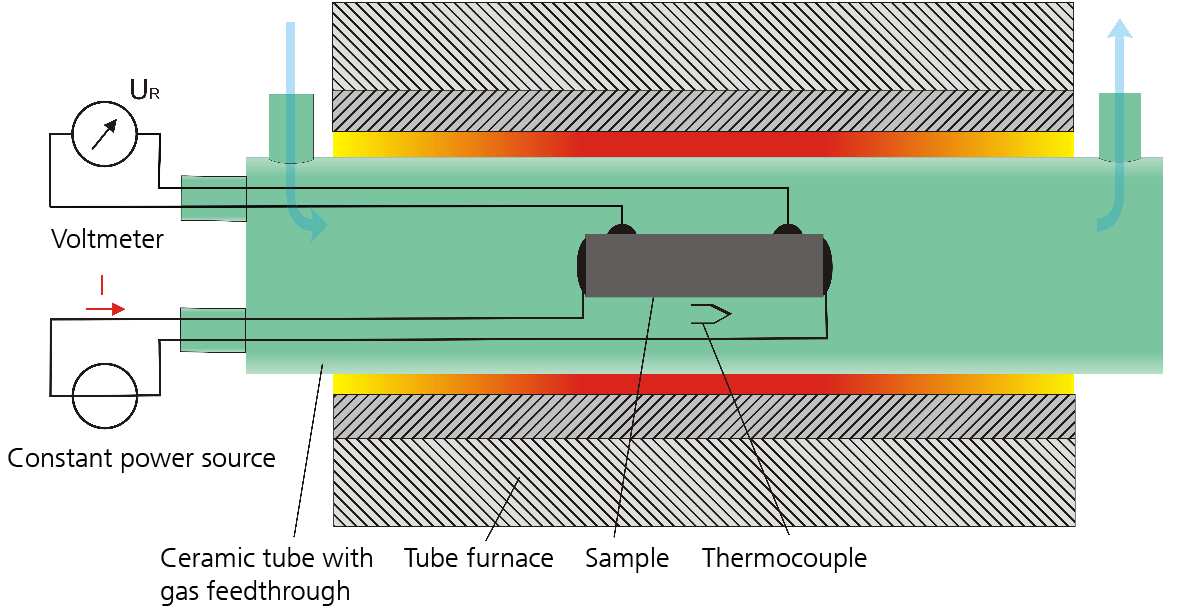
Measurement setup for temperature-dependent resistance measurement.
Electrical characterization: Measurement of the temperature-dependent electrical resistance
The Fraunhofer IKTS has unique test rigs that can be used to determine specific properties of electrically functional materials, especially structural ceramics. In addition to the description of electrical conduction processes, the temperature-dependent measurement of electrical resistance under a defined atmosphere makes it possible to indirectly identify and quantify processes such as oxidation, phase transformations and crack formation with high accuracy and sensitivity. The measurement setup ensures a compensation of thermal measurement and contacting influences.
Technical opportunities
- Precise analysis of the electrical resistance between 10-4 and 106 Ohm
- Variable arrangement of measurement (4-point or 2-point method)
- Characterization under argon, nitrogen, hydrogen and air atmosphere
- Temperature range from -170 up to 1400 °C